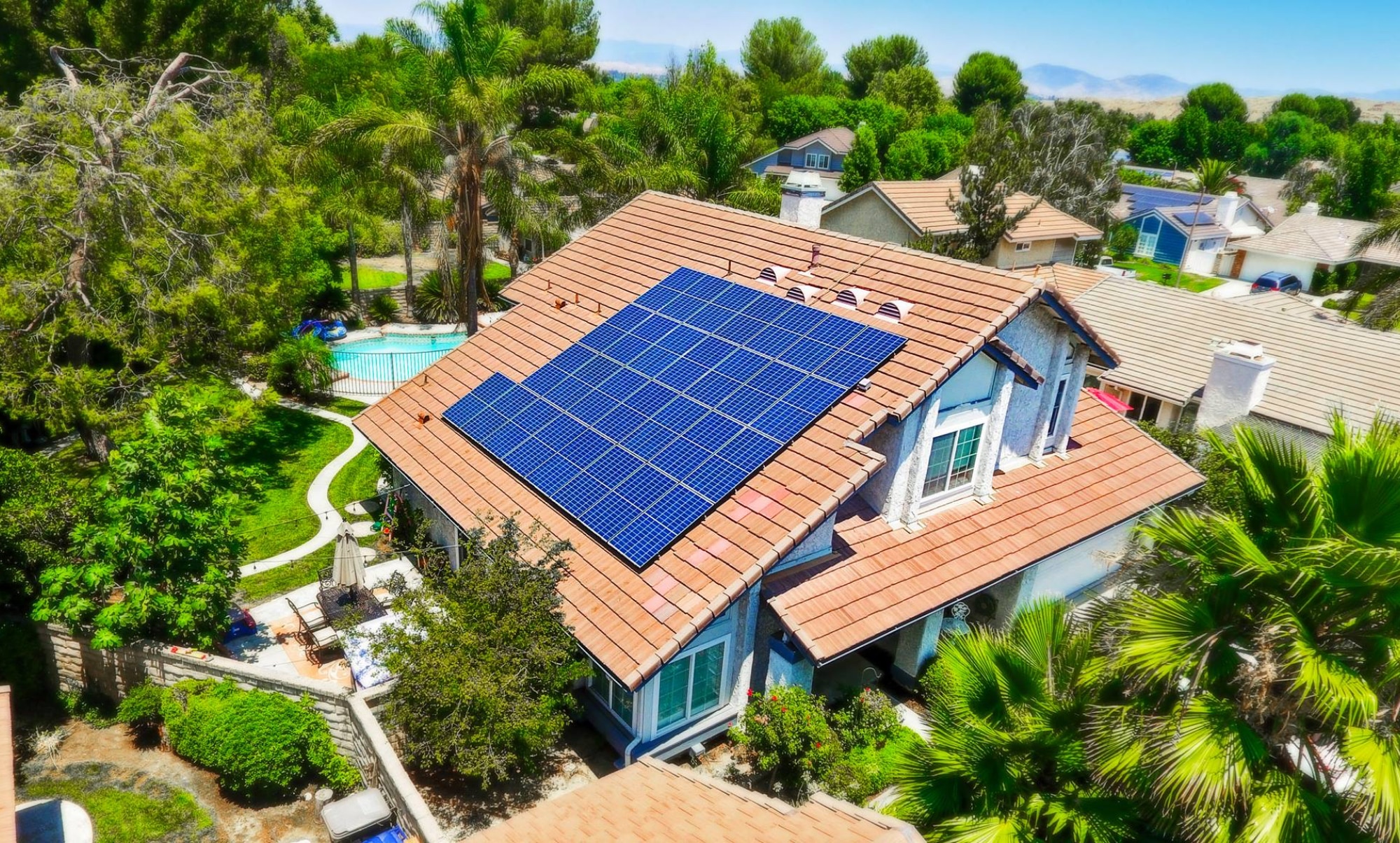
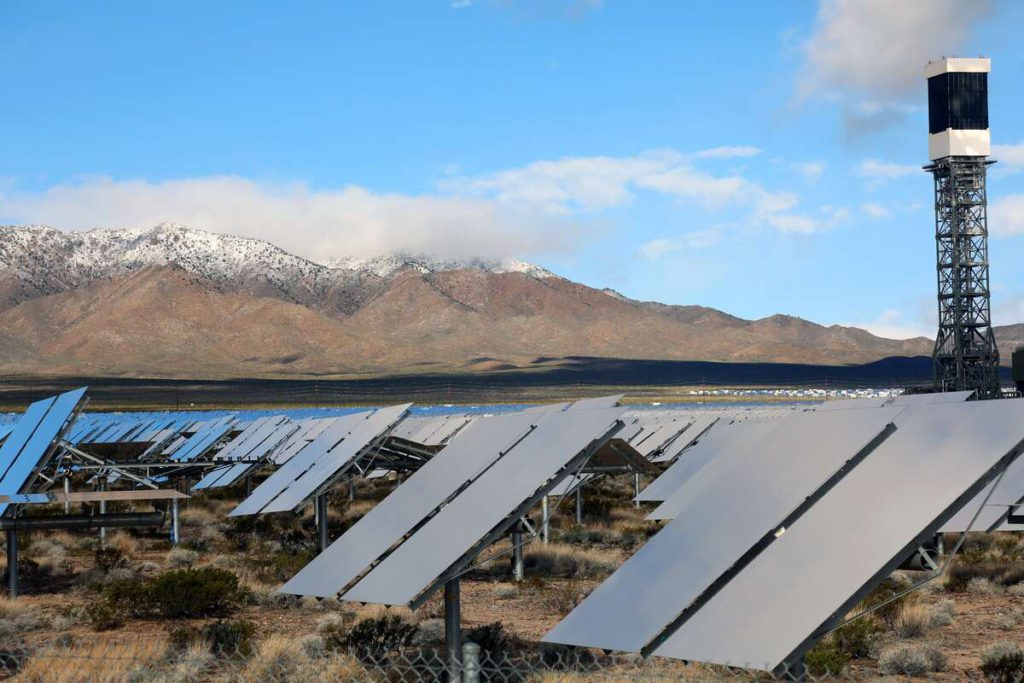
Some elements to consider for the cost of Solar Panels in Las Vegas. The average cost of a solar system in Las Vegas is about $2.32/ watt as of November 2019, which places an average 6 kW residence system at $13,920. Are there any type of solar tax credits in Las Vegas? Solar energy in Las Vegas, Nevada NV Energy consumers are eligible for a $150 per kW rebate for systems under 25kW. Las Vegas has terrific solar generation implying your financial savings from net metering are through the roof.
Does solar improve home worth in Nevada?
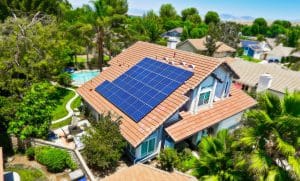
Solar boosts a home’s worth in Las Vegas, Nevada. A solar home’s selling price is commonly 3.74% higher or more than similar residential properties without solar. The cost of an average rooftop solar setup and battery is usually recouped in the home’s sale price.
The essential distinction between investing in solar panels and any other purchase is that solar panels last 25-30 years. This is a long, long time and you will certainly need customer care over all that time. The testimonials listed below of the two biggest company solar setup firms indicate bigger company solar firms are not delivering this support to their customers.
Solar Panel systems are currently a lot more budget friendly than ever before, and that financing choices other than solar leases have actually become viable. One of the most important of these is the solar loan, which integrates the ‘zero-down’ aspect of the solar lease with the benefits of system possession (‘ the most effective of both worlds.
The expense of installing residence solar panels in Las Vegas differs with the brand of solar panels and inverters you select, the setup business you select to install them, the relative simplicity or difficulty of installing solar panels on your home, and naturally the amount of solar panels you need.
The amount of solar panels you need is, subsequently, related to your power usage
NV Energy Bill Estimator?
The average industrial electricity rate in Las Vegas is 8.43 cents/ kWh. This average(commercial)electricity rate in Las Vegas is 4.53% less than the Nevada average rate of 8.83 cents/ kWh. The average (commercial) electricity rate in Las Vegas is 16.45% less than the nationwide average rate of 10.09 cents/ kWh.
Cost Of Electricity In Las Vegas
At an average expense of 12 cents per kilowatt-hour, that’s around $1.68 in electricity expense annually per square foot. So take a traditional casino like MGM Grand, at 171,000 square feet. Typically, MGM pays $287,280 annually to light its casino, or just under $24,000 per month.
If you have a regular home of about 1,500 square feet, with electric costs of about $100 per month, this home usually requires about 16 panels to entirely cover electric power needs.
How Does The Federal Solar Tax Credit Work?
Unfortunately, the 26% ITC is not a refundable credit. However, per Section 48 of the Internal Revenue Code, the ITC can be carried back 1 year and forward twenty years. This suggests that if you had a tax liability last year but don’t have one this year, you can still declare the credit.
Concept of using energy without endangering the requirements of future generations Sustainable energy is power created and used as if it “fulfills the needs of the here and now without compromising the capability of future generations to satisfy their own requirements.” The term “sustainable energy” is often used mutually with the term” renewable energy “. In general, renewable energy sources such as solar, wind, and hydroelectric energy are extensively considered to be sustainable.Th distinction between renewable and alternative power renewable energy should not be confused with alternative energy.But it gives biomass renewable energy because brand-new trees can be developed. What Is Renewable Energy? Renewable energy is energy that has actually been derived from earth’s natural resources that are not limited or exhaustible, such as wind and sunlight.Here’s what you should learn about the various types of renewable energy resources and how you can use these emerging innovations at your very own home.Renewable power is energy that has actually been originated from earth’s natural resources that are not limited or exhaustible, such as wind and sunshine. Renewable energy is an alternative to the traditional energy that counts on fossil fuels, and it tends to be much less hazardous to the environment.Until the mid-1800s, wood was the resource of almost all of the country’s energy needs for heating, cooking, and illumination. From the late 1800’s until today, fossil fuels coal, oil, and natural gas have been the major sources of energy. Hydropower and wood were one of the most used renewable energy sources till the 1990s. Ever since, the quantities and the percent shares of total U.S.A power usage from biofuels, geothermal energy, solar power, and wind power increased, and in 2019, the mixed percent share of these renewable energy sources was higher than the mixed share of wood and hydro energy.The consumption of biofuels, geothermal, solar, and wind energy in the USA in 2019 was nearly 3 times higher than in 2000. In 2019, renewable energy provided regarding 11.5 quadrillion British thermal units (Btu) 1 quadrillion is the number 1 followed by 15 zeros equal to 11.4% of overall USA energy intake. The electrical power sector made up concerning 56% of complete U.S.A renewable energy usage in 2019, and about 17% of total U.S.Electricity Generation was from Renewable Energy Sources.When referring to sources of power, the terms “sustainable energy” and “renewable energy” are often used mutually, however specific renewable energy jobs in some cases raise substantial sustainability issues. Renewable energy technologies are essential factors to sustainable power as they typically add to whole world power security, and decrease dependence on fossil fuel resources therefore alleviating greenhouse gas emissions.High oil rates and growing concerns about environment adjustment have increased interest in alternative and renewable energy sources, however these often set you back more than fossil fuels. RAND has checked out the feasibility of using renewable resources such as wind power and ethanol to reduce CO emissions and improve energy safety, and analyzed the most likely effects of such systems on customer energy prices. Is energy generated and used as if it “meets the needs of the present without compromising the ability of future generations to fulfill their very own needs.”? The term “sustainable power” is commonly used interchangeably with the term” renewable energy “. Generally, renewable energy resources such as solar wind power, and hydroelectric energy are extensively considered to be sustainable. Nevertheless, specific renewable energy projects, such as the cleaning of forests for the manufacturing of biofuels, can cause similar or even worse environmental damage than using fossil fuel energy.Renewable power should not be confused with alternative energy. The distinction is that alternative energy specifically avoids fossil fuels such as oil, gas, and coal. It doesn’t harm the environment or add greenhouse gases that include in international warming. For instance, wood burning is not alternative energy due to the fact that it results in deforestation and includes greenhouse gases. Yet it gives biomass renewable energy in that new trees can be developed. Hydroelectric power is both renewable and alternative. Yet numerous in the environment movement frown on reliance on this source. It can disrupt salmon runs, endangering not just the salmon however likewise the orcas and bears that eat them. It additionally uses massive amounts of concrete which releases greenhouse gases in its production Nuclear power is not considered a renewable resource because there is just enough uranium to last 1,000 years. However breeder reactors could expand that resource. Nuclear is also ruled out a practical alternative energy source because its waste is radioactive. Power source building and construction additionally uses a lot of concrete. Yet using atomic energy does not increase greenhouse gases therefore should be considered to combat international warming. Renewable power is flourishing, as development brings down prices and begins to supply on the promise of a clean energy future. American solar and wind generation are breaking records and being integrated into the nationwide electrical power grid without jeopardizing reliability.This means that renewables are increasingly displacing” dirty” fossil fuels in the power industry, offering the advantage of lower emissions of carbon and various other sorts of contamination. Yet not all sources of power marketed as “renewable” are beneficial to the environment. Biomass and big hydroelectric dams produce challenging tradeoffs when considering the impact on wildlife, environment change, and other problems. Here’s what you should learn about the different types of renewable energy sources and how you can use these arising technologies at your very own residence. Renewable energy, often referred to as tidy power, originates from natural resources or procedures that are regularly replenished. For instance, sunshine or wind keep beaming and blowing, even if their availability relies on time and weather.While renewable energy is frequently thought of as a new technology, using nature’s power has long been used for home heating, transportation, lights, and more. Wind has actually powered boats to cruise the seas and windmills to grind grain. The sunlight has given heat during the day and aided kindle fires to last into the night. However over the past 500 years or so, people significantly looked to cheaper, dirtier power resources such as coal and fracked gas. Now that we have significantly cutting-edge and less-expensive means to catch and maintain wind and solar power, renewables are becoming a more crucial power source, making up more than one-eighth of USA generation. The development in renewables is likewise taking place at ranges big and small, from roof photovoltaic panels on homes that can sell power back to the grid to huge overseas wind ranches. Also some entire rural areas rely on renewable energy for home heating and lighting.As renewable use remains to develop, a vital goal will be to modernize America’s electricity grid, making it smarter, a lot more protected, and much better incorporated throughout regions. Renewable energy originates from a source that is naturally occurring and renews after use.Alternative energy originates from non-renewable resources, however generates fewer emissions than standard power.
The earth intercepts a great deal of solar energy … about 137,000 terawatts- ten times what the occupants of the Earth use. So, is it likely that one day the world will depend totally on solar energy? To answer that question, first we need to study how the photovoltaic panels do it. By transforming solar energy into electrical energy. Photovoltaic panel are made of smaller modules called solar cells. The most common solar cell is made of silicon. It is semiconductor and is the second most abundant in the world. In the solar cell, Crystalline silicon filler is done between conducting layers. Each silicon atom is linked to neighboring atoms by 4 strong bonds This keeps the electrons in place and hinders the existing from streaming. Here lies the key: A silicon solar cell uses 2 various layers of silicon. The very first is N-type, which contains additional electrons. The p-type includes extra electron areas called cavities. And at the point where the two kinds of silicon fulfill, electrons can take a trip through the meeting point (p \ n) Leaving a positive charge on one side and a negative charge at the opposite.
You can think about light as a flux of infinitesimal particles. They are called photons. After introducing from the sun, when among these photons strikes the silicon cell, enough energy you can launch an electron from its bond, leaving a hole. The adversely charged electron and the favorably charged hold position, They are now totally free to move easily. However due to the electric field at the meeting point (p \ n), they can just go in one direction. An electron is being pulled in the instructions of n while the gap is being pulled to the instructions of p. The moving electrons are collected by thin metal fingers at the top of the cell. From there, it goes through an external circuit to do electrical work, as a running light bulb And that prior to returning through the conductive aluminum plate at the back. Each silicon cell puts half an electrical voltage However it is possible to arrange them in modules to obtain more power. 12 photocells are enough to charge a cell phone While it needs a number of systems to run an entire home. Electrons are the only moving parts of a solar cell And all of it goes back to where it originated from.
Absolutely nothing gets used up or consumed. So solar cells can last for many years. So, what is hindering us from becoming absolutely based on solar energy? There are political aspects at work. Not to mention the industrial interests that press for the extension of the status quo. But let’s focus now on the physical and market obstacles The most apparent of these obstacles is that solar energy is not equally distributed throughout the world. Some locations are sunnier than others. In addition to being unpredictable, only a little solar power is offered on cloudy days or at night. Therefore, overall reliance will require efficient methods For getting electrical power from sunny to cloudy areas, And efficient energy storage. The effectiveness of the cell itself is also a challenge. If sunshine is reflected rather than absorbed, or if the expelled electrons fall into a space prior to they cross the circuit, the energy of this photon is lost. The most effective solar cell to date- just 46% of the offered sunlight is converted into electrical power. Most of the present business systems have an efficiency of 15-20%.
In spite of these restrictions, in fact, it would be possible powering the whole world with present solar cell technology. We will may need financing to build the facilities And a big area. Price quotes put it in tens to hundreds of thousands of square miles. Which looks like a huge area, However just the Sahara Desert is over 3 million square miles. On the other hand, the solar cells improve and lower the expense. And take on electrical energy from standard networks.
And some innovations such as solar cell farms can totally alter the landscape. Putting aside thought experiments, there is a truth that there are over a billion people that do not have an authorized source of electrical energy. Particularly in establishing nations, which has a warm environment. For that reason, in those places, solar energy is much cheaper and much safer than the options offered, like kerosene.
Net metering is an agreement with the energy service company that permits you to get credit for solar energy sent into the grid. The energy company offers you a credit for the solar electrical power you produce, and you can utilize those credits at any time to draw power from the grid. That is why there are many benefits to utilizing solar power to power your home in 2020.
It enables you to receive credits on your electrical energy expense when your photovoltaic panels produce excess electrical energy and sends that electricity to the power grid.
Net metering enables qualified, customer-owned renewable solar to offset some or all of the consumer’s electrical energy consumption from the local electrical utility providfer. Initially, the customer-owned eco-friendly power is used to provide the client’s own electrical power usage, balancing out the requirement for electrical energy from their utility company. When the customer requires more electrical power than their system produces, the deficit is purchased from the energy. Conversely, when the customer utilizes less electricity than their system creates, the surplus is delivered to the utility’s distribution system and credited to the client. The client’s regular utility bill will reflect the net charge for electrical energy consumed by the customer and a credit for electrical energy offered back to the utility.
There’s another benefit from net metering. Given that your solar system is creating electrical energy near the point where it will be used, this minimizes strain on the grid’s circulation and transmission facilities and lessens energy loss from sending voltage many miles from the nearby power plant. While some claim that net metering represents an unjust concern on non-solar electricity clients, many net metering cost-benefit studies have actually found the opposite to be true.
Solar power is transformed from direct existing (DC) power to alternating current (AC) power through the inverter connected to the RGS. Net metering is a service which credits our property and business consumers who are geared up with a renewable generation system (RGS). This RGS may include additional electricity to the grid. Customers are billed for the quantity of energy (in kilowatt hours, kWh) provided from the energy to their house or service and the utility will offer Eco-friendly Generation Credit (RGC) for the energy received from the clients in excess of their usage. This offers consumers more control over their own electrical energy expense. Excess electrical power is enabled to flow through the power line to the OEU electrical grid.
The energy monitors the meter on your residential or commercial property to track just how much energy you utilize. If you withdraw more than you produce, you pay the utility for any additional usage.
If you produce more power than you utilize in a given month, any excess production is credited to your account and rolled over to future months. These credits can be “banked” for durations of low production, meaning credits you earn in August can be utilized in December when the days are shorter and the weather is even worse. Nevada Solar Group can help you to determine the most efficient use of your solar panel installation Nevada.
Net metering is a billing mechanism that credits solar energy system owners for the electrical power they add to the grid. For instance, if a domestic customer has a PV system on their roof, it might produce more electrical power than the house uses throughout daylight hours. If the home is net-metered, the electrical power meter will run backwards to provide a credit versus what electricity is consumed at night or other periods when the home’s electrical power use goes beyond the system’s output. Consumers are only billed for their “net” energy usage. Usually, only 20-40% of a solar energy system’s output ever enters into the grid, and this exported solar electricity serves neighboring customers’ loads.
Having Nevada Solar Group install a Las Vegas solar panel system to give you a net metered solar system is the very best way for you to take advantage of renewable resource while conserving thousands of dollars over the lifetime of the system.
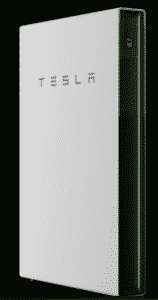
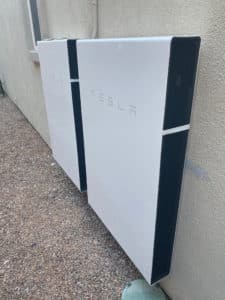
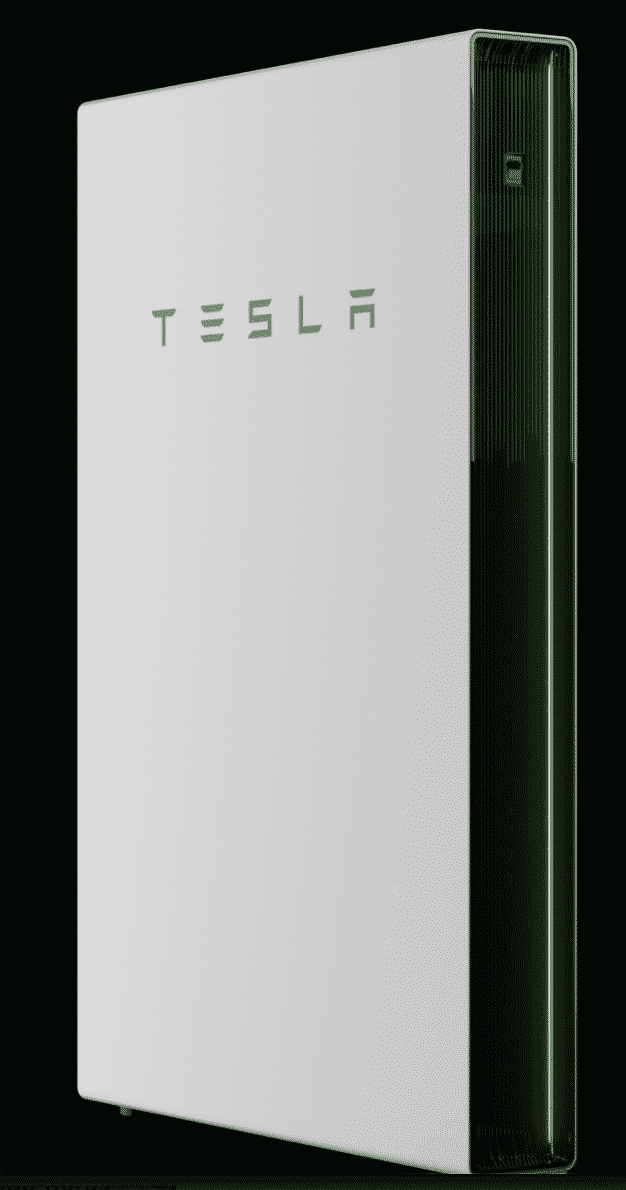
We have installed many Tesla Powerwall 2 Home Batteries for our customers. It is a great way to store the energy that your solar panels are getting from the sun. But, there are a lot of questions about the home battery. So, we thought we’d answer some of these questions.
Can Tesla Powerwall 2 be used off grid?
Are you interested in going off grid with the Tesla Powerwall 2? The Tesla Powerwall, with its huge 13.5kWh of energy storage IS able to be used in Off Grid systems, enabling you to remove your grid connection completely.
Can a Tesla Powerwall power a home?
Powerwall is a rechargeable home battery system that stores energy from solar or from the grid and makes it available on demand. It can power your home during the night or back up your home in the event of a power outage. … As with all Tesla products, new features will be added to Powerwall with over-the-air updates.
Does Tesla Powerwall save money?
So in terms of household cash flow, the Powerwall and solar system only saves around $650 a year, but that still needs to pay back the original purchase cost too.
Can Tesla Powerwall replace a generator?
Your solar system and your Tesla Powerwall will not power your home while your generator is running. Instead, if the sun is up, your solar will charge your Tesla Powerwall while your generator powers your home.
Can Tesla Powerwall be charged by Generator?
Powerwall is installed between the utility meter and the transfer switch and can charge from solar while the grid is operational. However, the Powerwall and generator are not directly integrated which means Powerwall does not charge from the generator.
How many solar panels does it take to charge a Powerwall?
So in the real scenario you would need 2.25×1000 / 400 = 5.625 kW solar panels . You usually have 200-400 W panels readily available in the market. Assuming there is a panel with a rating of 300 watts, then you will need about 18 such panels to charge your Tesla Powerwall in a day.
How long can a Powerwall power a house?
Alternative Power Solutions For starters, in its recommended configuration, the Tesla Powerwall can keep your home powered for seven days (or more!) without you having to do a thing.
How many solar panels does it take to charge a Tesla Powerwall 2?
The maximum solar panel capacity that is allowed is up to 133% the size of the inverter. This means a house with a 4.999 kilowatt inverter could install up to 6.66 kilowatts of panels 4, which should be sufficient to regularly fully charge a Powerwall 2, provided daytime electricity use isn’t too high.
How many solar panels does it take to run a house off grid?
So, when we divide our total consumption by the expected output of one solar panel, we see that roughly ten solar panels of this size would be enough to power the home. Ten solar panels at a size of 365 watts per panel results in an on or off the grid solar system of around 3.65 kilowatts.
How many KW is a Tesla Powerwall 2?
How long will Powerwall last in an outage? Powerwall stores 13.5 kWh of usable electricity and will recharge using solar power (if you have it).
Do I need an inverter with Tesla Powerwall?
The Powerwall 2 is an AC battery (AC in / AC out), so in order to function together with a solar array the Powerwall 2 requires a separate solar inverter (Refer to diagram below).Nov 20, 2019
Who can install Tesla Powerwall?
Installers can use a smartphone, tablet or laptop to commission the Powerwall system. Installation should be performed by a certified electrician. For Powerwall installations with Backup Gateway 1, see the Backup Gateway 1 Installation Page.
How many Ah is a Tesla Powerwall?
Batteries often have their storage capacity in terms of Amp hours (Ah), with a typical 12v car battery at 40Ah and larger deep cycle battery around 110Ah. So we need to convert the Powerwall 10 kWh to Ah for a simple comparison.
What is the best solar battery?
What are the best batteries for solar? Batteries used in home energy storage typically are made with one of three chemical compositions: lead acid, lithium ion, and saltwater. In most cases, lithium ion batteries are the best option for a solar panel system, though other battery types can be more affordable.
How many batteries are needed to power a house?
A battery bank designed to power an average American household for three days would need to supply 90 kilowatt-hours of energy. The battery from the previous example can supply 2.4 kilowatt-hours, so this system would need 38 batteries.
Are whole house generators worth it?
One solution, some experts say, is the whole house generator. Yes, they’re expensive — often costing as much as $15,000 — but they will kick in automatically in the event your house goes off the grid. … With 3.5 million Americans left without power in any given week, these generators may be worth considering.
Can Tesla Powerwall be installed outside?
Powerwall can be installed indoors or outdoors and can operate within a wide range of temperatures, from -4°F to 122°F. … If you are in an area that is often outside of the 32°F to 86°F range, we recommend that Powerwall is installed indoors.
How much does a Tesla add to your electric bill?
As an example, let’s take the Tesla Model X Long Range which houses a 100 kWh battery. Using the U.S. national average electricity rate of 13.27 cents per kWh, we can quickly calculate that it would cost 13.27 to “fill up” a Model X from a completely drained battery. That equates to roughly $0.04 per mile driven.
How many solar panels do I need to run a refrigerator?
The average refrigerator takes about three or four average solar panels to run, but that number could be as low as one or quite a bit higher.
How many solar panels does it take to produce 1000 kWh?
30 solar panels
A home that consumes 1,000 kWh per month will normally need between 20 and 30 solar panels. The exact number changes depending on the specifications of the chosen panel model, as well as the sunshine available at the project site.
How many batteries do you need to live off grid?
In a typical off grid cottage application, you would have a 24 or 48-volt battery bank which is somewhere in the range of 600 to 800 amp hour. They can go as high as 6,000 amp hour or more in larger systems. What type of cells do you need?
How much does a Tesla Powerwall 2 weigh?
Dimensions: 1150 mm x 755 mm x 155 mm (45.3 in x 29.7 in x 6.1 in) Weight: 122 kg (269 lbs)
How does the Tesla Powerwall work?
Powerwall is charged by solar during the day, when solar panels are producing more electricity than the home is consuming. Powerwall then stores that energy until the home needs it, such as when solar is no longer producing at night, or when the utility grid is offline during a power outage.
How do I reset my Tesla Powerwall Gateway?
How do I reboot my Tesla Powerwall?
Turn off the circuit breaker isolator of your solar inverter.• Turn off your Tesla Powerwall by setting its ON/OFF switch to the OFF position.• Turn off the normal supply main switch to the house (usually located in your main meter board or in the Tesla gateway).• Turn off the Tesla main switch.
What is a Powerwall Gateway?
Backup Gateway 2 for Tesla Powerwall provides energy management and monitoring for solar self-consumption, time-based control, and backup operation. … Communicating directly with Powerwall, Backup Gateway 2 allows you to monitor energy use and manage backup energy reserves from any mobile device with the Tesla app.
How many batteries can a 100 watt solar panel charge?
By the rule of thumb, a 100 watt solar panel inputs 30 amp-hours per day into your batteries. So you would need 1.33 100 watt panels, or one 133 watt panel to match your solar power needs.
How many batteries do I need for a 5kw solar system?
Most inverters that are capable of delivering 5 KiloWatts of power can have an input voltage ranging from 96 Volts to 120 Volts depending on the model. If the inverter requires 96 Volts, then you should connect 8 batteries in series.
Is it worth getting a battery with solar?
Solar batteries still cost more than a standard diesel generator, but they can provide backup power without producing greenhouse gas emissions. If you have a standard solar panel system, you’ll still lose power during a power outage because of how your panels are connected to the electric grid.
How many 200ah battery can power a home?
200 x 12 watts equals 2400 watts at 12 volts DC for 1 hour divided by 20 equals 240 watts with AC for 1 hour at 240 volts. A home requires 2Kw heater, 15Kw cooker, 6Kw water heater, Lights’ TV’ Stereo and other small electricals, totalling up to 30Kw maximum. 3o Kilowatts divided by 1Amp DC (=12w) = 2500 Amps DC.
Can you run a whole house on solar power?
With the ongoing refinement in the industry, once inefficient solar panels are now capable of powering your entire home. The right combination of solar panels, inverters, and battery packs can do it. You can run your entire home with a solar panel system. You need to know what you’re doing, though.
How many solar panels does it take to charge a 12 volt battery?
For a 12V system, if you need to replace 100A/h of charge to your batteries each day, and you have 8 sunlight hours in each day you will need… 1200WH / 8H = 150W of solar panels. In reality it is recommended that you always overrate your requirements by at least 20%, therefore you would need 180W of solar panels.
Are whole house generators tax deductible?
Are whole-home generators tax deductible? No. A generator is not solar powered and doesn’t meet the requirements to qualify for *any* tax breaks of *any* type on *any* return – state or federal.
Will a 22kw generator run my house?
A 20kW generator will run most house receptacles, lights, and up to a 5-ton central air conditioner. … You have a second air conditioner and heating system for the upstairs, but this area of the home is not important to you while operating on generator power.
Which home generator is better generac or Kohler?
Kohler generators know to automatically switch on because their standby generator models are installed permanently next to your home, and are always monitoring your power supply. Additionally, Kohler engines are a bit sturdier than Generac engines.
How much does it cost to install a Tesla Powerwall?
As a rough estimate, you can expect the Tesla Powerwall to cost between $9,600 and $15,600 for a full system installation. That number includes the battery, an inverter, various other equipment costs, and estimated installation costs.
How long can a UPS power a router?
The trick is that most of your home infrastructure devices are low power, pulling maybe a dozen watts at most. The same UPS capable of keeping your desktop computer and monitor on for 15 minutes will likely power your cable modem, router, and Wi-Fi access points (if separate) for 90 minutes or more.
Which is better CyberPower or APC?
Which is better CyberPower or APC?
Power Rating The APC provides 225W while the CyberPower is a bit higher at 255W. Despite this difference, the APC model has longer run times. Expect about 35 minutes of runtime with 50W of equipment compared to 26 minutes with the CyberPower unit.
Do solar panels drain batteries at night?
What is a Solar Charge Controller. A solar charge controller manages the power going into the battery bank from the solar array. It ensures that the deep cycle batteries are not overcharged during the day, and that the power doesn’t run backwards to the solar panels overnight and drain the batteries.
How long will a 12 volt battery run a refrigerator?
A very small user of power is a 1.2 watt LED light running on a 12 volt power source will use 1.2W / 12V = 0.1 amps. Therefore a 100ah (amp hour) battery will last for 1000 hours. A slightly different example is a 60 watt fridge running on a 12 volt power source uses 60 /12 = 5 amps, but only while the motor runs.
Can a 100 watt solar panel run a refrigerator?
Originally Answered: Can a 100-watt solar panel run a refrigerator? Yes. A full size SunFrost fridge uses about 30 watts. So 100 is enough for that batteries on the system would be good too.
What are the 2 main disadvantages to solar energy?
Disadvantages of Solar Energy
Cost. The initial cost of purchasing a solar system is fairly high. … • Weather Dependent. Although solar energy can still be collected during cloudy and rainy days, the efficiency of the solar system drops. … • Solar Energy Storage Is Expensive. … • Uses a Lot of Space. … • Associated with Pollution.
What can a 300 watt solar panel run?
A 300 Watt solar power plant is sufficient to charge up one 12 Volt 150 AH DC Battery within 4 to 6 hours of clear day light which may help you to run your load of at least 270 Watt continuously for 6 hours span. Two ceiling fan (60 to 80 watt) along with 2–3 led bulbs (10 watt each) might run continuously for 6 hours.
How many solar panels do I need to power a 3000 square foot house?
Depending on where you live, the average 3,000 sqft house will need between 17 and 26 premium solar panels to supply 100% of its electricity needs.
Is living off the grid worth it?
Going off the grid is an attractive option for those who want more self-sufficiency and less dependence on the currently established institutions. Creating a life where you are no longer dependent on the electrical grid means you produce your own power, collect or pump your own water and often grow your own food.
How many batteries do I need to run a 2000 watt inverter?
Now come to batteries, a 2000 watts inverter usually needs 24 volts to generate power. 2 batteries of 12 volts 200AH (you can use other capacity too) in series connection needed and out of them you would be able to use 100 AH x 24 volts that is 2.4kWh.