Thursday, August 27, 2020

Elementor #1486

Fun Solar Power Data. People want serious Solar Power informatiom, but sometimes even the serious can be expressed in fun details.

Fun statistics on solar power include stuff like the fact that enough sunlight hits the Earth’s surface in a single hour to fulfill the energy needs of the entire planet for a full year. Just imagine! That information is from the American Society for Solar Energy.

Here are a few more interesting facts about solar power. 

12 Interesting Solar Power Facts 

*As early as 1921, the Nobel Peace Prize for Solar and Photovoltaic experiments was awarded. Albert Einstein was awarded this prize.

*When silicon is taken from a mere one ton of sand and used in solar photovoltaic panels, the silicon will generate as much electricity as 500,000 tons of coal.

*There are over 10,000 homes in the U.S. that get their electricity absolutely from solar power.

*A British astronomer by the name of John Herschel cooked solar-powered food on a journey to Africa almost 200 years ago.

*In 1982 California opened the first major solar power plant.

*In a home where a solar model replaces an electric water heater, solar power will slash water bills by more than 50 per cent per year.
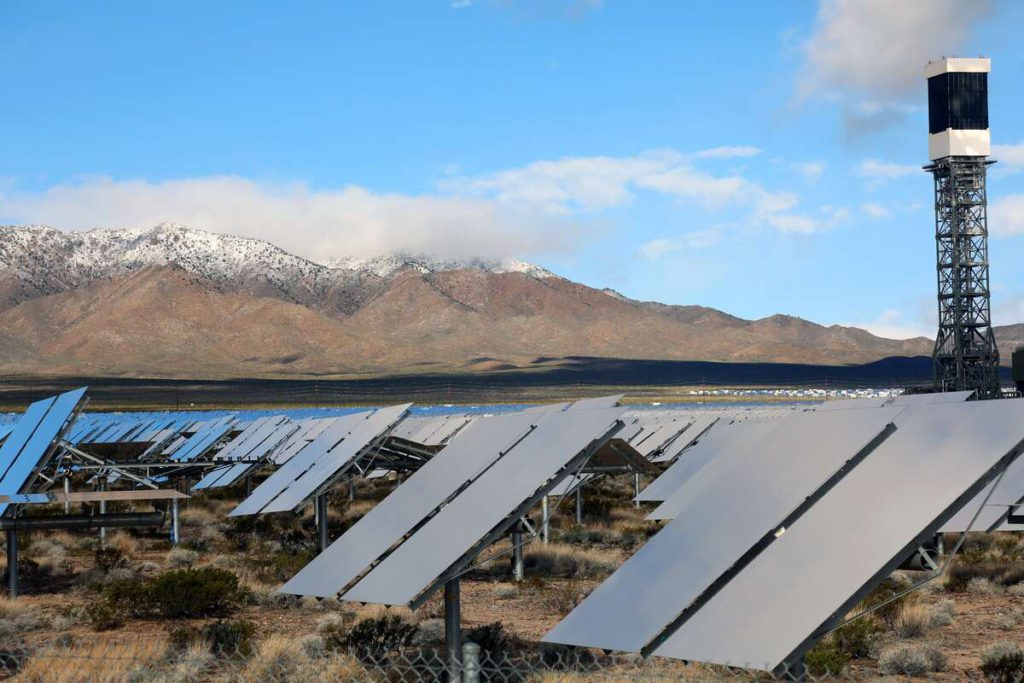
Sunlight Energy- Nevada Solar Group

*According to the Department of Energy, the price of photovoltaic ( PV) solar panels has dropped by 200 per cent in the last 30 years. Owners now pay about 10 to 40 cents per kilowatt-hour.

*One U.S. study The Department of Energy (USDOE) reported that on June 14, 2000 solar power conditions in San Francisco were nearly ideal (99 per cent). In that area 100,000 customers lost power that day. Solar power could have provided all that they wanted.

*Another USDOE analysis found that the roofs of California’s municipal and county buildings could produce 200 megawatts of renewable electricity, if covered with solar panels! If you cover school roofs in California with solar power panels, you would add 1,500 megawatts more to the peak power supply in the state.

*In California, covering every commercial and industrial roof available with solar panels could produce all the electricity required in that state during the day.

*Germany makes the best possible use of solar resources, even though its climate has many rainy days.

*Solar energy passes from the sun to the earth in just about 8 minutes.

The post Elementor #1486 appeared first on Nevada Solar Group.


source https://nevadasolargroup.com/elementor-1486/?utm_source=rss&utm_medium=rss&utm_campaign=elementor-1486


Monday, August 24, 2020

Fun Facts About Solar Energy

Fun Solar Power Data. People want serious Solar Power informatiom, but sometimes even the serious can be expressed in fun details.

Fun statistics on solar power include stuff like the fact that enough sunlight hits the Earth’s surface in a single hour to fulfill the energy needs of the entire planet for a full year. Just imagine! That information is from the American Society for Solar Energy.

Here are a few more interesting facts about solar power. 

12 Interesting Solar Power Facts 

*As early as 1921, the Nobel Peace Prize for Solar and Photovoltaic experiments was awarded. Albert Einstein was awarded this prize.

*When silicon is taken from a mere one ton of sand and used in solar photovoltaic panels, the silicon will generate as much electricity as 500,000 tons of coal.

*There are over 10,000 homes in the U.S. that get their electricity absolutely from solar power.

*A British astronomer by the name of John Herschel cooked solar-powered food on a journey to Africa almost 200 years ago.

*In 1982 California opened the first major solar power plant.

*In a home where a solar model replaces an electric water heater, solar power will slash water bills by more than 50 per cent per year.

Sunlight Energy- Nevada Solar Group

*According to the Department of Energy, the price of photovoltaic ( PV) solar panels has dropped by 200 per cent in the last 30 years. Owners now pay about 10 to 40 cents per kilowatt-hour.

*One U.S. study The Department of Energy (USDOE) reported that on June 14, 2000 solar power conditions in San Francisco were nearly ideal (99 per cent). In that area 100,000 customers lost power that day. Solar power could have provided all that they wanted.

*Another USDOE analysis found that the roofs of California’s municipal and county buildings could produce 200 megawatts of renewable electricity, if covered with solar panels! If you cover school roofs in California with solar power panels, you would add 1,500 megawatts more to the peak power supply in the state.

*In California, covering every commercial and industrial roof available with solar panels could produce all the electricity required in that state during the day.

*Germany makes the best possible use of solar resources, even though its climate has many rainy days.

*Solar energy passes from the sun to the earth in just about 8 minutes.

The post Fun Facts About Solar Energy appeared first on Nevada Solar Group.


source https://nevadasolargroup.com/fun-facts-about-solar-energy/?utm_source=rss&utm_medium=rss&utm_campaign=fun-facts-about-solar-energy

Solar Panels – The magic behind this environmentally friendly power

Solar Panels – The magic behind this environmentally friendly source of power and why purchasing them now is sensible. But why is sustainable energy so important?

Sustainable Energy in Nevada

Solar panels can be made for harnessing the sun’s energy reserve to any other energy form. Usually the power that generates would be available in the form of heat (for example for heating a building) or electricity that can be used to power anything from a radio to a whole company.

Throughout this article we will speak about the larger residential and industrial panels that are built to provide power for the home or company, where these panels are frequently mounted at the top of the home or close to the home if space allows. We will also focus on the form of panels which generate electricity collectively known as Photovoltaic panels.

Sustainable Energy- Nevada Solar Group

Solar panels are a great way of reducing energy costs , reducing your carbon emissions and becoming more self-sufficient. In urban areas where renewable energy advocates and policymakers build opportunities for this friendly and quiet alternative energy source, they are now becoming extremely popular. For example, in installing and implementing a residential solar system, the State of Colorado has provided substantial rebates on the upfront costs.

Once the panels have been installed, electricity from the device will be used to energize the home, or, when energy is generated in excess of demand, will be redirected for use on the grid, where the electrical power provider will buy it back. There may be occasions when you potentially receive money from your panels. With discounts factored into the initial cost, it would typically take seventeen to twenty-four years to recover the initial expense, at which point you can produce power from the sun at no cost. But, with the 26% Federal Tax Credit, you can now own your power years earlier and not be reliant on your local power company.

Usually low-power solar panels are available in configurations of 12 v or 14 v, while high-power panels are available in 24 volts. Since solar panels are DC, you may usually need a power inverter to adjust it from low voltage as a Direct Current to a different voltage alternating current to be consistent with the voltage and type that feeds both the home and the grid.

Conventional solar panels are constructed using twin sheets of semiconducting silicon, combined with phosphorus and boron atoms. Amorphous silicon solar cells are a highly powerful, emerging array of photovoltaics that differ in output, structure, and manufacture than traditional photovoltaics that use crystalline silicon. The H-AS solar panels are produced in the same way, but they are made just 1 micrometer in depth by laying down polymorphous silicon at very high pressures and temperatures.

Solar panels are normally maintenance free and many manufacturers will supply a guarantee of electrical output often for as long as 20-25 years.

Solar panels are mounted on either side of your house that gets the most exposure to the sun. This would be the north-facing aspect in localities south of the equator, and its south-facing aspect in locations north of the equator.

The post Solar Panels – The magic behind this environmentally friendly power appeared first on Nevada Solar Group.


source https://nevadasolargroup.com/solar-panels-the-magic-behind-this-environmentally-friendly-power/?utm_source=rss&utm_medium=rss&utm_campaign=solar-panels-the-magic-behind-this-environmentally-friendly-power

What Does a Solar Inverter Do?

A solar inverter or PV inverter, is a type of electrical converter which converts the variable direct current (DC) output of a photovoltaic (PV) photovoltaic panel into a utility frequency alternating current (AC) that can be fed into a commercial electrical grid or used by a local, off-grid electrical network. The main purpose of a solar inverter is to change the DC electricity streaming from your solar panels into useful AC power that your house appliances use.

Nevada Solar Group Solar Inverter

It is a critical balance of system (BOS)– component in a photovoltaic system, allowing the use of ordinary AC-powered equipment.  Solar power inverters have special features adjusted for use with photovoltaic or pv arrays, including maximum power point tracking and anti-islanding protection.

Just how solar inverters operate in a PV system

When the sun shines on your solar photo-voltaic (PV) system, electrons within the solar cells start to move, which produces direct current (DC) energy. String and central inverters featured different advantages and disadvantages, yet string inverters are much more serviceable when a failure unavoidably takes place. In a solar PV system with a string inverter, each panel is wired with each other right into a string, and multiple strings (normally up to three) can be connected to your central inverter.

The post What Does a Solar Inverter Do? appeared first on Nevada Solar Group.


source https://nevadasolargroup.com/solar-inverter/?utm_source=rss&utm_medium=rss&utm_campaign=solar-inverter

Nevada Solar Plans: Huge Solar Array North of Las Vegas

Nevada is home to some of the brightest sun available. It’s only natural that it is considered an excellent renewable energy source. For tha...